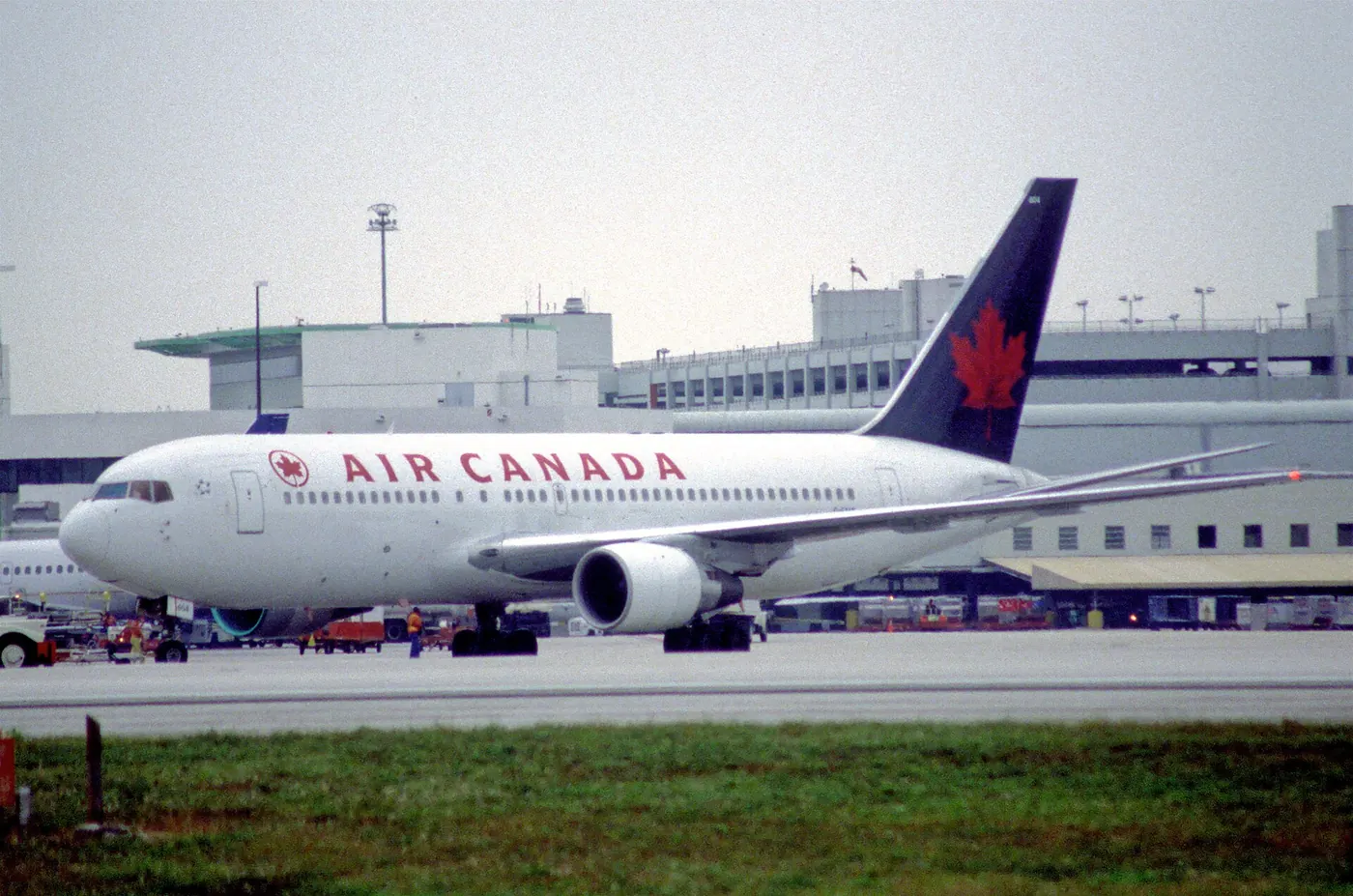
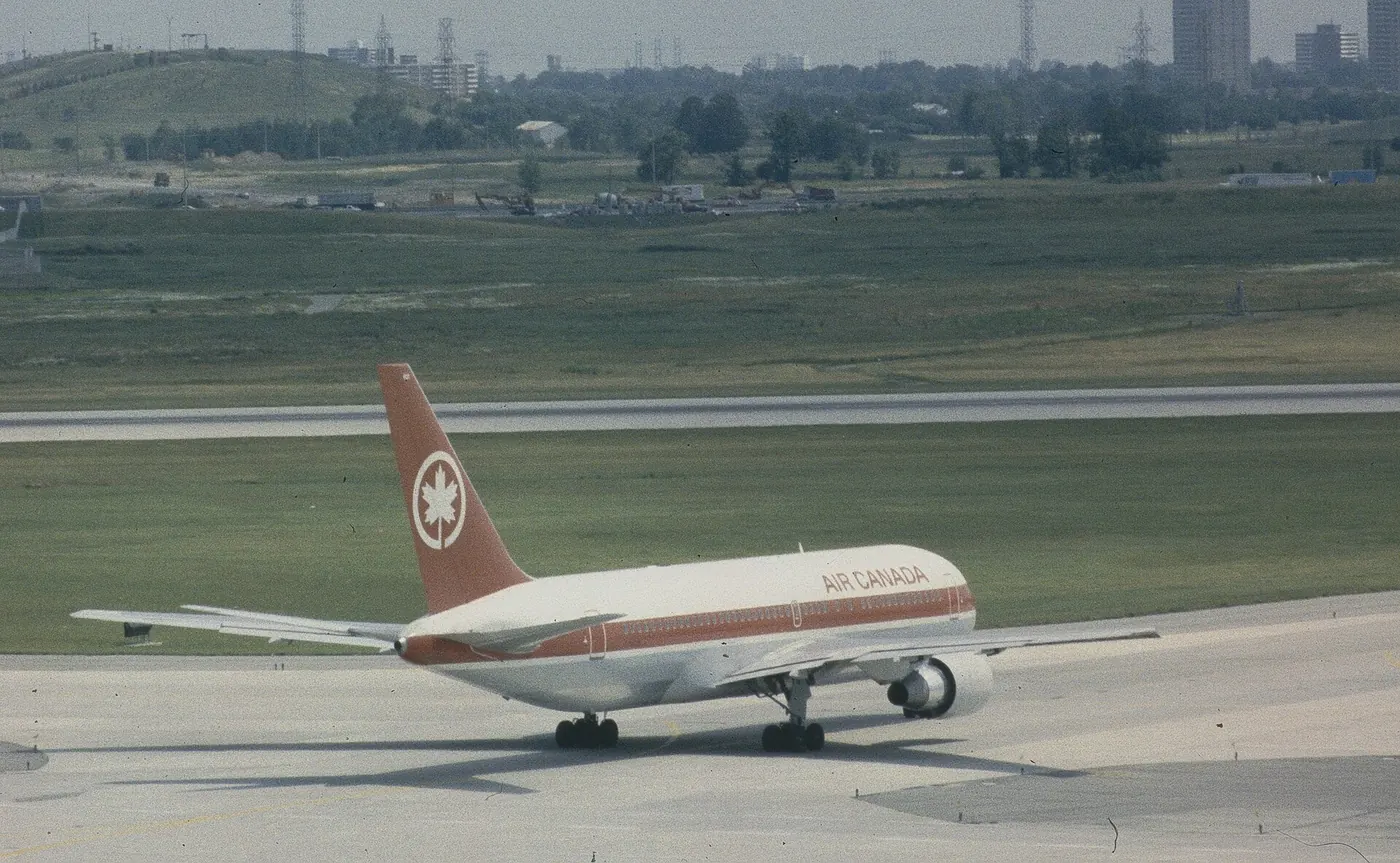
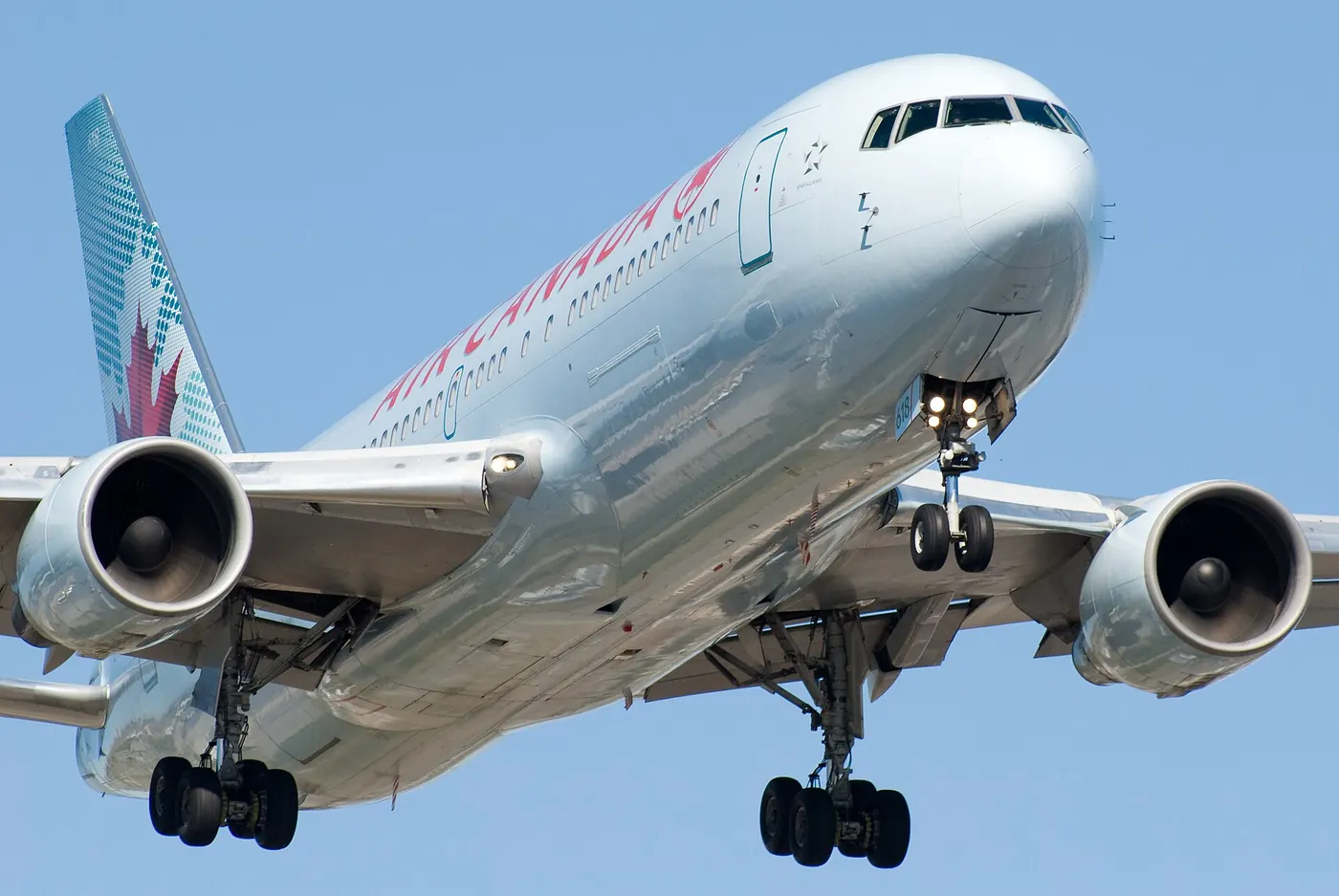
The Gimli Glider: a Boeing 767 out of fuel at 41,000 feet
A pounds-for-kilograms mix-up sent an airliner into the sky with half the fuel it needed.
Listen to the story
- Date
- 23 July 1983
- Flight
- Air Canada 143
- Aircraft
- Boeing 767-233
- Place
- Gimli, Manitoba, Canada
On 23 July 1983 Air Canada flight 143 was on its way from Montreal to Edmonton with 61 passengers and eight crew. The aircraft was a new Boeing 767, among the airline's first to use metric units.
A wrong sum on the ground
The fuel quantity system was not working, so the fuel was measured by hand with a dripstick. To convert volume to weight, the ground crew used the factor for pounds instead of kilograms. Everyone believed the tanks held 22,300 kilograms. They held less than half of that.
Silence in the sky
At 41,000 feet the fuel pressure warnings began. The left engine stopped, then the right. Most of the screens went dark because they relied on engine power, and only a few instruments stayed alive on a small ram air turbine.
Landing without engines
Captain Robert Pearson was also a glider pilot. First Officer Maurice Quintal remembered an old air force base at Gimli where he had once served. They did not know part of it had become a race track, with a family event under way that day. The aircraft was too high, so the captain used a forward slip, a glider manoeuvre, to lose height quickly.
The aircraft touched down and the nose gear collapsed. The nose scraped along the runway and the aircraft stopped a short distance from the crowd. Nobody died; the injuries were minor and most happened during the evacuation.
Changing measurement units needs training and clear procedures for everyone, from ground crew to pilots. An aircraft should not leave with its fuel gauges out of service unless the quantity has been checked independently.
Sources
- Final Report of the Board of Inquiry into Air Canada Boeing 767 C-GAUN (Lockwood Inquiry, 1985)